"Valuing Every Voice": A Media Collective that Amplifies Citizens' Voices
On the second floor of the Seoul NPO Support Center, there is a collaborative workspace called Yeokda, where organizations supporting the sustainable growth of NPOs gather. In 2020, the space continued to host individuals and groups revitalizing the NPO ecosystem. This is the third interview in that series, featuring Media Noon.
"Creating content means sharing social issues with people, helping them become interested, and inviting those issues into their own lives."
Media Noon creates content that discovers the value in voices overlooked by mainstream media and delivers those stories to the public. With the goal of raising awareness about social issues, they have produced content that connects readers and interviewees. Through this work, team members have also experienced learning and growth by developing new perspectives on society. Recently, Media Noon has expanded its activities by sharing the changes they experienced with other young people.
The interview was conducted both online and offline to accommodate team members living in different regions. Founder Eunchong Cho and Creative Director Yun Hyeong discussed the founding and early activities online. Later, at the Center, Yun and team member Seo Junhee shared more about Media Noon's current focus.
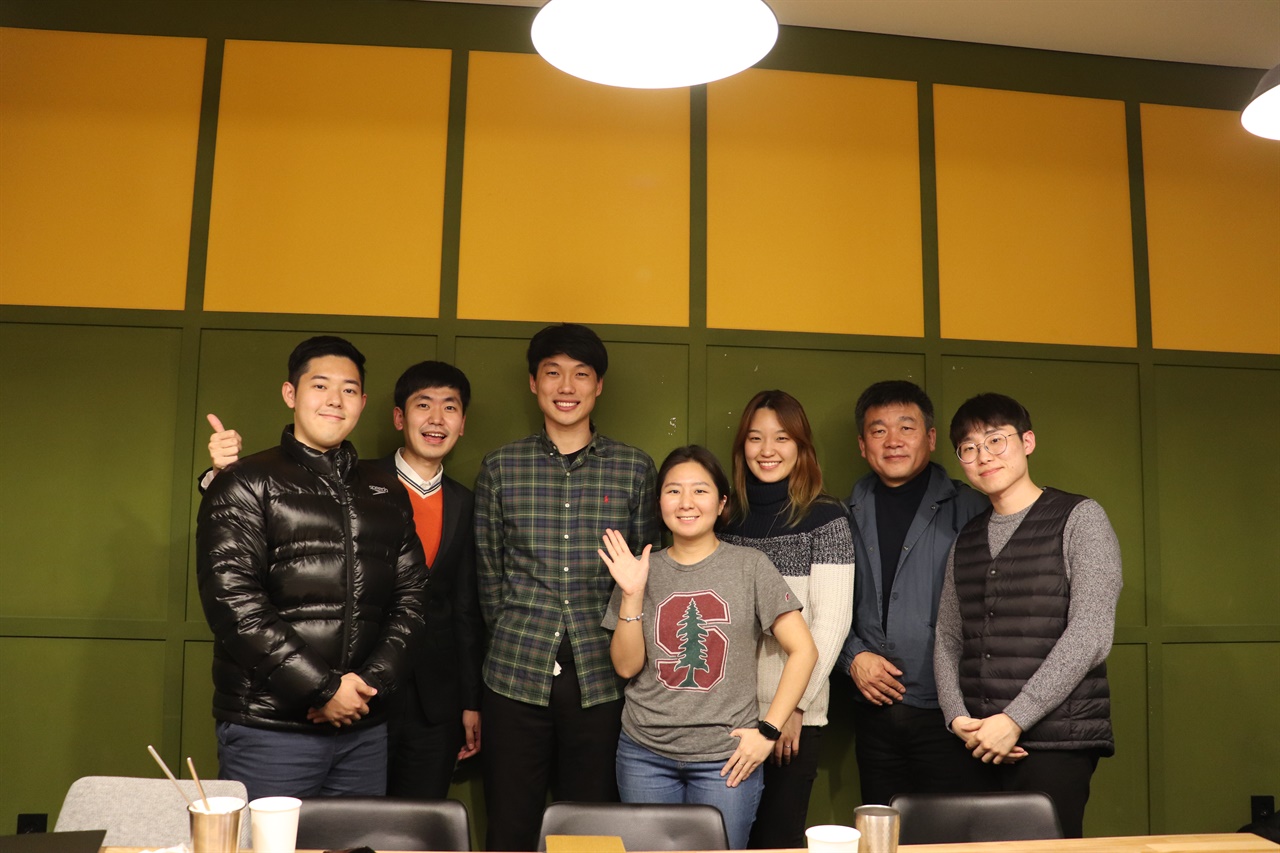
Mentoring program organized by Media Noon, featuring New York Times correspondent Choe Sang-Hun and team members (c) Media Noon
The Beginning of Media Noon
- How did Media Noon begin?
Eunchong Cho: Before starting Media Noon, I worked at international organizations and media outlets. When I worked at NGOs, I found that even when they were doing important and meaningful work, it was difficult to effectively communicate that to the public. On the other hand, when I worked in media, if an NGO's activities or social issues did not align with immediate public interest, it was difficult to secure coverage.
I wanted to create a media platform that would address social issues we believe are important, even if mainstream media had little interest in them. At the time, I was studying Peace Journalism at Kyung Hee University's Graduate School of Peace and Public Welfare. In December 2017, together with classmates, I launched Media Noon.
From the very beginning, we adopted the slogan "Valuing Every Voice." We wanted to listen to and report on the stories of those whom mainstream media fails to value - the voices of individual citizens. In a media market tilted toward capital and powerful figures, we wanted to create a media organization that focuses instead on citizens' voices.
- How did you join Media Noon, Yun?
Yun Hyeong: I majored in media and had long dreamed of becoming a journalist. Through an acquaintance, I met Eunchong. I wanted to gain practical experience and work outside the classroom in real-world settings.
What Does Media Noon Do?
Media Noon's work can be broadly divided into three areas:
- Producing content
- Organizing youth gatherings such as talk concerts and book clubs
- Conducting internal research and study during the planning process
When producing content, a significant amount of time is spent researching and studying social issues before filming begins.
Recently, they launched an online platform called Noon Lab (눈랩) to communicate with young people based on their accumulated experience.
An Alternative Media Recording Society Through Youth Perspectives
Media Noon began as an alternative media collective, launching its first project with North Korean defector youth. Speaking from the perspective of fellow young people, they shared their stories. Since then, Media Noon has amplified the voices of migrants, children with disabilities, and other marginalized groups often overlooked by mainstream media.
Their first major project resulted in 11 articles published in OhmyNews in September and October 2018, focusing on North Korean defector youth.
- Why did you choose North Korean defectors as your first topic?
Cho: Initially, we imagined focusing on migrants, since I had been researching immigration and racial minorities. In 2018, there were rapid changes regarding North Korea - such as the summit between President Moon Jae-in and Chairman Kim Jong-un. But media coverage focused mainly on politicians and policy. There was almost no attention to people's lived experiences.
Rather than discussing abstract "North Korea issues," we wanted to encourage people to reflect on those living alongside us. We did not want to present defectors as "special people," but as young people in their twenties in South Korea, grappling with similar concerns.
Yun: I had never met a North Korean defector before, so I felt nervous at first. I assumed they would speak differently or look different. But when I met a young woman defector, I realized I could not distinguish her at all - and she even spoke standard Korean better than I did. I realized I had held stereotypes.
Her main concern was employment. Her background was not the defining issue. That encounter changed how I saw defectors.
Defectors are often represented politically in media. I believed Media Noon's content could help reduce prejudice and show other dimensions of their lives.
- What is distinctive about the content Media Noon produces?
Yun: If covering the same issue, large media outlets might seem more advantageous in terms of reach and quality. So we needed to find our own strength. When covering defectors or migrants, we always framed the topic around youth. Because we are young ourselves, we can approach them from a shared perspective.
Cho: We cannot offer money to interviewees. We must persuade them with our content - showing that we genuinely want to deliver their stories. We may have sacrificed broader mass appeal, but future interviewees matter more to us. The people we seek to meet are socially marginalized. We want to create media content that captures their faces and lives.
Of course, we constantly ask ourselves whether producing more widely viewed content would be better. But ultimately, we believe it is more meaningful to create content that reflects what interviewees want to say. We believe this value will shine one day.
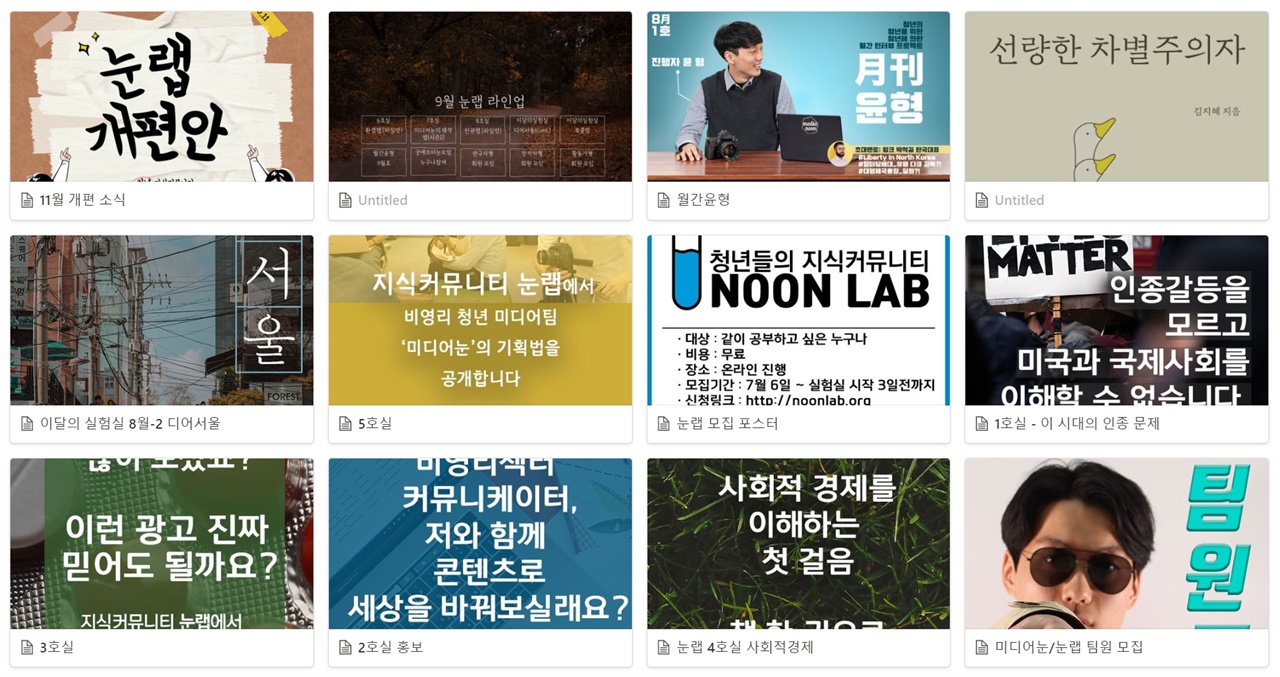
Online gathering hosted by Noon Lab (c) Media Noon
Noon Lab: A Youth Knowledge Community
For Media Noon members, the organization has been a space of solidarity and growth. Wanting to share this experience with other young people, they launched Noon Lab, an online youth community.
- How did Noon Lab begin?
Yun: While producing content, I realized that simply working alongside others can be a form of support. In the non-face-to-face environment shaped by COVID-19, we wanted to create something that allowed young people to support one another beyond geographic boundaries.
Noon Lab aims to be more than emotional solidarity - it is a knowledge-sharing community. Youth is a time to build expertise and grow by seeing role models. We hope Noon Lab can serve that function.
Currently, about 150 members participate. The long-term goal is for participants themselves to initiate and lead gatherings.
- What kinds of activities does Noon Lab host?
Members studying sociology created a group titled "Racial Issues of Our Time." Someone working at a nonprofit launched another group, "Nonprofit Content that Changes the World."
One notable project was "Seoul Republic" Season 2, which explored the lives of young people who moved from regional areas to Seoul. Unlike Season 1, which was produced internally, Season 2 was collaboratively created by participants who never met in person. Over two months, eight people produced five videos entirely online.
Participants contributed in various ways - writing, filming their own stories, editing. It was a collaborative experience where people found roles suited to them.
Sustainability and the "Youth Network" Experiment
Like many nonprofit organizations, sustainability is Media Noon's biggest challenge.
Media Noon has operated through voluntary participation rather than paid employment. Cho emphasized that members are encouraged to pursue projects they genuinely care about - topics they would explore even outside Media Noon.
Although they once hoped subscriber growth might bring financial independence, reality proved difficult. When advised to produce more entertaining content to grow YouTube subscribers, they questioned whether adding sensational elements aligned with their values. They ultimately chose to prioritize meaningful storytelling over popularity.
- What gives you energy to continue?
Yun: Media Noon allowed me to explore questions I was curious about. For example, I had little prior interest in disability education rights. But after reading an article about a mother of a child with developmental disabilities, I asked myself, "If I had been there, how would I have looked at that situation?"
Meeting activists and families deepened my understanding. Media coverage often portrays them narrowly - showing protests or depicting mothers as frightening. But through direct encounters, I developed empathy. Those moments feel deeply meaningful.
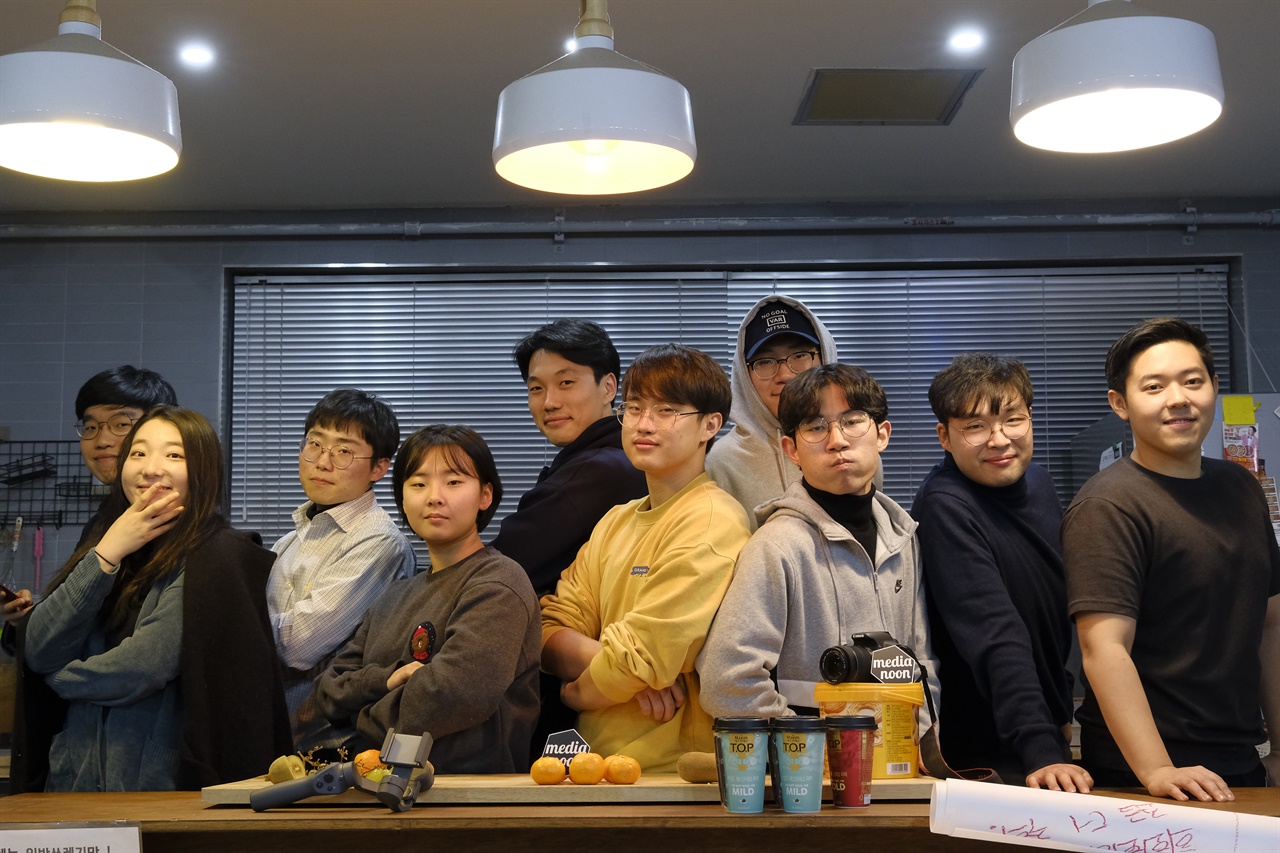
Media Noon team workshop, January 2020 (c) Media Noon
Future Goals
Seo Junhee: As an undergraduate, I was involved in activities related to the issue of Japanese military sexual slavery (often referred to as "comfort women"). I want to create content focusing on these women's human rights.
Yun: I want to become someone who delivers sincere stories to others. If people who pass through Media Noon continue to share its values, that itself has social value.
Cho: Ideally, we want to become a good media organization. We do not call ourselves journalists but a media team. We aim to produce independent, public-interest content without relying on capital or external interests.
Ideally, we would generate our own revenue, hire young people who share this vision, and become a sustainable workplace. But even if that is not achieved, we want to continue delivering necessary social stories. We hope this space endures for a long time - functioning as media that meaningfully transmits voices.
Media Noon emphasized that they wish to remain a media collective that communicates social issues they care about, rather than simply being called journalists. Their commitment to truthfully conveying interviewees' voices reveals the strength they hold as a media team.
Although the interview has ended, their hope to continue Media Noon's work - and for many young people to experience and share change through this space - lingers.